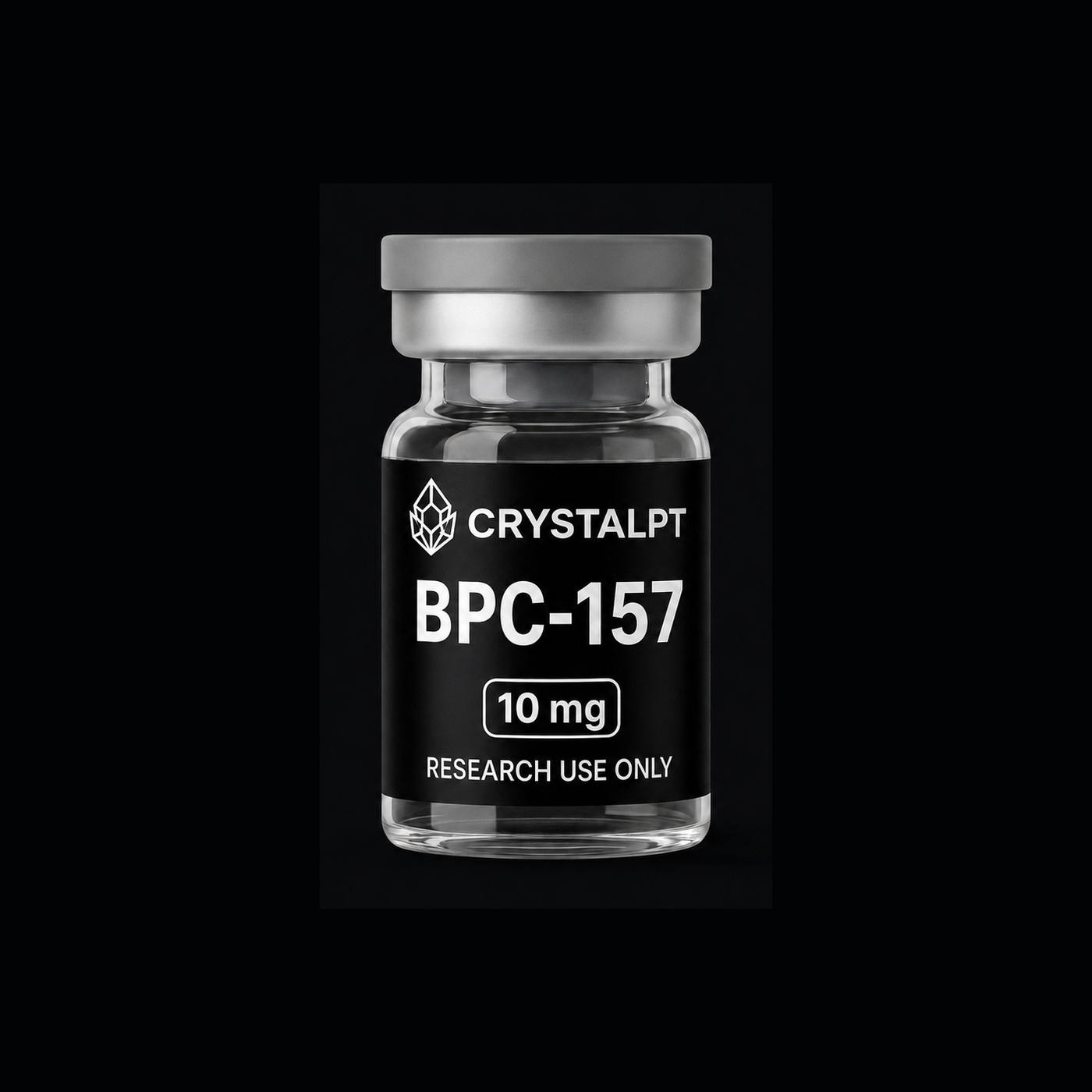
bpc-157 research product by Crystal Peptides
Muscle & Recovery

bpc-157

10mg/vial

Popular peptide reference compound for tissue repair, tendon, and gut-barrier research models.

€55,00
Third-party testedCOA availableEU shippingResearch only
For in-vitro laboratory research only. Not for human or veterinary use.This information is provided for scientific and educational product context only. It does not describe or recommend human use, veterinary use, diagnosis, treatment, prevention, dosage, administration, or clinical application.
Research intelligence

Research context for BPC-157

This information is provided for scientific and educational product context only. It does not describe or recommend human use, veterinary use, diagnosis, treatment, prevention, dosage, administration, or clinical application.

Product research overview

BPC-157 is a synthetic 15-amino-acid research peptide associated with a sequence described in the literature as part of a gastric body-protection compound. Current research focuses on signaling involved in vascular response, extracellular-matrix activity, and epithelial-barrier biology; it is not an approved medicine in this storefront context.

MaterialSynthetic pentadecapeptide
Primary areaTissue and barrier models
EvidenceExperimental literature
CatalogMuscle & Recovery

Mechanism & pathway context

  • Experimental literature examines angiogenic signaling, including VEGF/VEGFR2-related observations, alongside nitric-oxide-system interactions.
  • Controlled research models examine tendon, ligament, muscle, vascular, and gastrointestinal endpoints. These mechanistic observations do not establish clinical efficacy.

Vascular signaling

Angiogenesis and endothelial-response markers in experimental systems.

Nitric oxide context

Interactions with nitric-oxide signaling discussed in preclinical literature.

Matrix repair models

Tendon, ligament, muscle, and connective-tissue endpoints in animals.

GI barrier models

Gastric and intestinal integrity endpoints in experimental injury models.

What researchers study

  • Endothelial signaling and vessel-formation markers
  • Fibroblast migration and extracellular-matrix endpoints
  • Inflammatory mediators in controlled models
  • Histology and functional endpoints in animal injury models

Current evidence snapshot

Evidence areaResearch contextStrengthNotes
Tissue repairControlled injury modelsExperimentalMultiple model types; human translation is unconfirmed.
Angiogenic pathwaysCell and vascular modelsExperimentalVEGFR2 and related signaling have been investigated.
Human evidencePublished clinical literatureLimitedRobust controlled human evidence is lacking.

Limitations & safety boundaries

  • This storefront supplies research reference material only; research findings do not establish consumer outcomes.
  • Evidence may be limited to cell, tissue, or animal models and may not translate to humans.
  • No dosing, administration, preparation, or clinical guidance is provided.
  • Researchers and buyers are responsible for institutional requirements and applicable local laws.

For in-vitro laboratory research only. Not for human or veterinary use.